Nobody gets into leadership because they love conflict. But conflict finds every leader eventually.
Grace without authority turns into avoidance. Authority without grace turns into domination. The leaders who manage conflict well hold both.
Why Most Leaders Avoid Conflict
Conflict aversion in leaders is almost never about being weak. It’s about caring deeply. You don’t want to hurt someone. You don’t want to damage a relationship. But avoiding the conversation is still a choice. And it has consequences just as real as the conversation you didn’t have.
The Biblical Case for Addressing Conflict Directly
Matthew 18:15 is one of the clearest instructions in Scripture on this topic: “If another believer sins against you, go privately and point out the offense. If the other person listens and confesses it, you have won that person back” (NLT).
The instruction is to address it directly, not to wait for it to resolve itself.
A Framework for Conflict Conversations
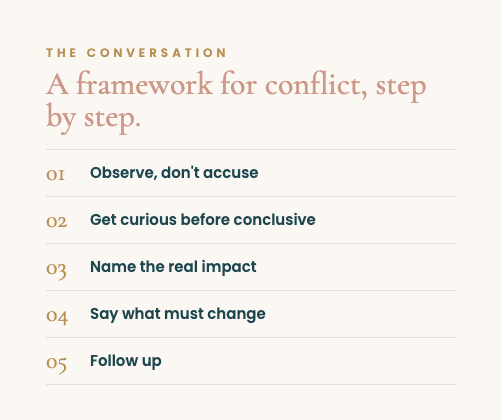
Start with observation, not accusation. Tell me what you saw, not what it means about the person.
Get curious before you get conclusive. Ask before you tell.
Be clear about the impact. Name the effect of the conflict on the work, the team, and the culture.
Name what needs to change. You don’t end the conversation vaguely hoping things will improve. Name what you need to see going forward.
Follow up. The conversation is not the end of the process.
When It’s Your Conflict
If you are in conflict with someone on your team, go directly, go privately, go first. As the leader, waiting for the other person to come to you first is a form of using your position to avoid accountability.
Leading through conflict with grace is not about being soft. It’s about being secure enough in your authority that you don’t have to perform it. You can be warm and direct, honest and kind, clear and gracious. That’s the kind of leadership that actually builds something.