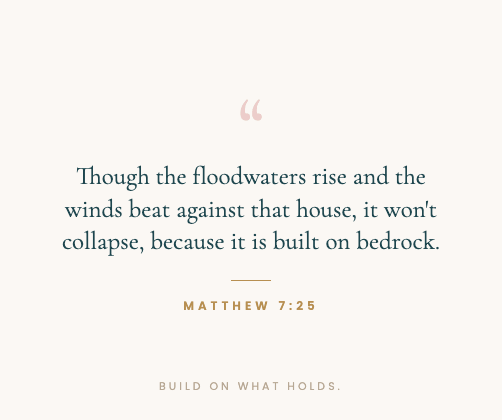
There’s a version of values-based business that looks good in a branding deck and does very little in practice. The values are on the wall but not in the decisions. They’re in the mission statement but not in how a difficult employee situation gets handled.
Genuine faith-based values are different because they’re not interchangeable. They come from something bigger than brand strategy, and that makes them sturdier.
What Faith-Based Values Actually Mean in Business
Faith-based values are not exclusively about Bible verses in your content or prayer before meetings. They’re about a specific set of commitments that come from a conviction about how God calls us to treat people, steward resources, and build things.
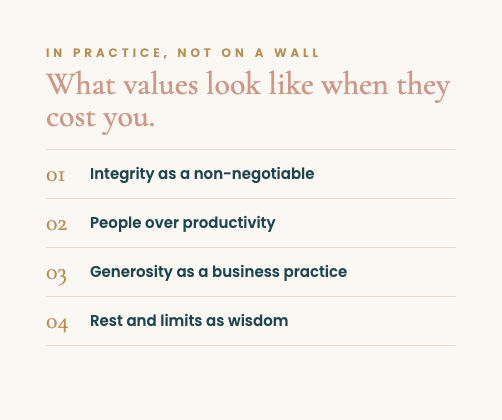
Integrity. Generosity. Service. Honesty. Justice. These aren’t nice-to-haves. They’re the operating system.
Why These Values Drive Long-Term Success
They create trust. Proverbs 11:3 says: “Honesty guides good people; dishonesty destroys treacherous people” (NLT). Businesses built on integrity earn trust that marketing can’t buy.
They attract the right people. Teams and clients who align with your values stay longer and go deeper. The ones who don’t will filter themselves out, which is a feature, not a bug.
They create a filter for every decision. When values are real, every major decision has a question attached to it: does this align with what we believe? That clarity speeds up decision-making and reduces regret.
The Long Game Advantage
Kingdom-minded business owners play a longer game than the quarter. When your success metric includes faithfulness, integrity, and impact, you make different decisions about people, pricing, and partnerships.
When Values Cost You Something
The test of real values is what you do when honoring them costs you money, a client, or a deal. The leaders who hold the line in those moments are the ones who build something that outlasts them.